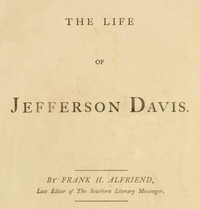
The Life of Jefferson Davis by Frank H. Alfriend
Most Civil War stories start in the North. This one doesn't. The Life of Jefferson Davis, written incredibly soon after the war's end, is a biography from the other side of the conflict. Frank Alfriend, a Southern writer, gives us a close-up view of Davis's journey from a West Point graduate and Mexican War hero to a U.S. Senator, and finally, to the President of the Confederate States of America.
The Story
The book walks us through Davis's entire life, but the heart of it is his presidency. It's not a military history. Instead, it focuses on the immense pressure he was under: managing a government that was brand new, dealing with fierce state governors who often put their own interests first, and trying to run a war with limited resources. You see his struggle to keep the Confederacy unified while facing relentless attacks from the Union. The narrative follows him right through to the war's end, his capture, imprisonment, and his later years spent defending the Southern cause in writing.
Why You Should Read It
This book is fascinating because it's a primary source with a strong point of view. Alfriend is clearly sympathetic to Davis, which is exactly what makes it valuable. You're not getting a dry, balanced account from a century later. You're getting the passionate defense of a man written when memories were still fresh and emotions were high. It forces you to see the war through Confederate eyes—their logic, their fears, and their sense of betrayal. Davis comes across as a rigid and sometimes difficult leader, but also as a man of unshakable conviction who truly believed he was defending constitutional principles. It complicates the easy hero/villain narrative in a compelling way.
Final Verdict
This isn't for someone looking for a neutral introduction to the Civil War. It's perfect for history buffs who already know the basic timeline and want to dive deeper into the Confederate perspective. If you've ever wondered how the Southern leadership justified their actions to themselves, this book is a direct line to that thinking. Read it alongside a biography of Lincoln to get the full, clashing picture of leadership during America's most divided time. It's a challenging, thought-provoking look at a figure we often define solely by his side in the war, not by the man he was.