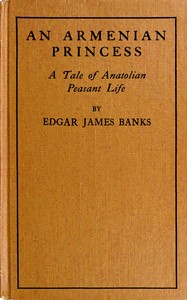
An Armenian princess : A tale of Anatolian peasant life by Edgar James Banks
Edgar James Banks was an American archaeologist and diplomat who lived and worked in the Ottoman Empire in the early 1900s. 'An Armenian Princess' is his attempt to translate his deep, firsthand observations into a narrative form. Don't let the title fool you—this isn't a fairy tale. It's a grounded look at Anatolian peasant life through the eyes of its characters.
The Story
The book follows a young Armenian woman, Maritza, and her family in their small village. The plot is gentle, mirroring the rhythms of agricultural life: planting, harvest, family disputes, and village festivals. The central tension isn't a dramatic war or rebellion, but the constant, low-grade pressure of living as a Christian minority in a Muslim-majority empire. Banks shows the quiet negotiations, the moments of cooperation between Armenian and Turkish neighbors over shared water rights, and the underlying currents of suspicion that could be stirred by outside officials or rumors. It's a story about maintaining dignity, tradition, and family in a landscape that is both beautiful and demanding.
Why You Should Read It
I found this book fascinating because it feels authentic. Banks isn't writing from a library; he's writing from memory and experience. You get incredible details—how bread was baked in communal ovens, the symbolism in traditional embroidery, the bargaining at a local market. He doesn't paint heroes or villains, but complicated people trying to get by. Maritza's strength is in her quiet perseverance, not royal blood. The book's greatest power is its timing. It captures a snapshot of a specific culture on the brink of the unthinkable tragedies of the early 20th century, making it a poignant, if sometimes unintentional, record of a lost world.
Final Verdict
This isn't a fast-paced beach read. It's for the curious reader who loves social history and intimate cultural portraits. Perfect for anyone interested in the Ottoman Empire beyond the sultans, in everyday history, or in ethnographic literature. If you enjoyed books like 'I Capture the Castle' for their detailed domesticity or appreciate the observational style of a writer like Rebecca West, you'll find much to admire here. Be prepared for a slow, descriptive journey, but one that offers a truly unique window into the past.